
Key Takeaways
Wondering what you’ll actually pay to fix that cracked screen? Here’s the quick breakdown before we dive into the details:
-
Most cracked phone screen repairs in the U.S. cost between $90 and $350 in 2024, depending mainly on brand and model
-
Budget Android phones often run $90–$160 for screen replacement, while flagship iPhones and Samsung Galaxy models are typically $220–$400+ for out-of-warranty repairs
-
AppleCare+, Samsung Care+, and carrier insurance can drop the repair bill to around $29–$99 per incident, but require prior enrollment
-
Choosing between Apple/Samsung authorized centers, local shops, or DIY kits is the biggest factor in what you actually pay
-
A cracked screen on a 2019 phone might cost $100 to fix, while a 2023 flagship can exceed $400 without coverage
Introduction: Why Phone Screen Repair Costs Vary So Much
If you’ve ever searched for a straight answer on how much a phone screen repair costs, you’ve probably noticed that prices are all over the map. That’s not just frustrating marketing—there’s a real reason for the confusion. Modern phone screens aren’t simple pieces of glass anymore. They’re complex assemblies combining a protective glass layer, a touch digitizer, and an LCD or OLED display panel, all precisely calibrated to work together.
Since around 2019, screen repair prices have climbed steadily as manufacturers shifted toward OLED technology, curved edges, and even foldable displays. A cracked screen on a 2019 budget Android might cost around $100 to fix, while a 2023 iPhone 15 Pro Max or Galaxy S23 Ultra can run $350–$450+ without any protection plan. The gap between these extremes reflects the dramatic differences in technology, parts availability, and labor complexity.
Understanding why costs vary helps you avoid overpaying and figure out whether repair even makes sense for your device. Here’s what drives the price differences:
-
The device itself: Brand, model year, and screen technology (LCD vs. OLED vs. foldable)
-
Type of damage: Superficial cracks versus shattered glass with display or touch failure
-
Parts quality: Original manufacturer parts versus various grades of aftermarket screens
-
Who does the repair: Official service centers, independent shops, or DIY kits
This article walks through real-world price ranges for 2024 and helps you decide whether to repair or replace your phone.
Average Phone Screen Repair Cost by Brand and Model
The prices below assume out-of-warranty repairs at independent U.S. repair shops using good-quality replacement parts as of 2024. Official manufacturer service centers generally charge more but include OEM parts and factory calibration.
Apple iPhone
Iphone screen repair costs vary significantly by generation:
- iPhone 8, iPhone SE, iPhone XR: Roughly $120–$180 for screen replacement
- iPhone 11, iPhone 12 series: Around $150–$230 depending on the specific model
- iPhone 13, iPhone 14, iPhone 15 Pro/Pro Max: Often $280–$400+ due to OLED panels and True Tone calibration requirements
At the Apple Store, expect to pay at the higher end of these ranges. For example, an iPhone 14 screen repair runs about $329 out of pocket, but drops to just $29 with AppleCare+—a 91% savings that makes coverage worth considering for newer devices.
Samsung Galaxy
Samsung pricing spans a wide range depending on whether you have a budget A-series or a premium flagship:
- Galaxy A-series (older models): Around $110–$170
- Galaxy S20, S21, S22 series: About $200–$280
- Galaxy S23 Ultra, Note/Ultra lines: Typically $280–$420
- Galaxy Z Flip, Z Fold foldables: Can exceed $450, with inner display repairs on models like the Z Fold reaching $599 at authorized centers
The new screen technology in foldables makes them especially expensive to repair due to flexible OLED panels and complex hinge mechanisms.
Google Pixel
Google doesn’t publicly list repair prices, but third-party shop averages give a good picture:
- Pixel 4a, 5a: Around $130–$170
- Pixel 6, 7 series: About $180–$240
- Pixel 8, 8 Pro: Closer to $230–$300
Other Android Brands
For Motorola, OnePlus, Xiaomi, and Oppo devices, expect:
- Mid-range models: Generally $120–$220
- Budget models: Often slightly cheaper, but parts availability and shipping time can vary
Keep in mind that official Apple Store and Samsung service center prices run higher than local shops, but they include original parts and proper calibration for features like True Tone on iPhones.
Key Factors That Affect Phone Screen Repair Cost
No online quote is truly accurate until a technician inspects your device in person. The numbers you see advertised are starting points, not guarantees. Understanding what drives costs helps you judge whether a quote from your local shop is a fair price or whether you’re being overcharged.
The following factors have the biggest impact on your final bill:
-
Type and severity of screen damage
-
Phone brand, model year, and screen technology
-
Quality of replacement parts (OEM vs. aftermarket)
-
Repair service provider type
-
Existing warranty, AppleCare+, Samsung Care+, or carrier insurance
Let’s break each one down.
Type and Severity of Screen Damage
The difference between a small crack and a completely shattered display dramatically affects what you’ll pay. Technicians typically categorize damage as either cosmetic or functional:
-
Cosmetic damage: Hairline cracks where the display still shows images correctly and touch works everywhere. These repairs may qualify for glass-only replacement at some shops, costing less than full assembly swaps.
-
Functional damage: Shattered glass combined with black spots, colored lines, dead touch zones, or a completely dark screen. This usually requires replacing the entire display assembly, pushing costs toward the higher end of the ranges mentioned above.
If the impact also damaged the frame, camera, or back glass, your repair bill may bundle multiple components. Water damage in addition to a cracked screen often means extra diagnostic fees and board cleaning, adding $50–$100 or more beyond the screen-only cost.
Phone Brand, Model Year, and Screen Technology
Premium hardware drives premium repair pricing. Modern displays use technology that didn’t exist in mass-market phones just five years ago:
-
OLED, AMOLED, and LTPO panels found in iPhone X through 15, Samsung S-series and Note lines, and Pixel 6–8 are significantly more expensive than the flat LCD panels in pre-2018 models
-
Curved edges and foldable designs require specialized adhesives and careful reassembly
-
120 Hz refresh rate panels cost more than standard 60 Hz screens
Here’s a concrete contrast: replacing a 2018 iPhone 8 lcd assembly might run under $150, while a 2023 iPhone 15 Pro Max OLED can exceed $400 at official service centers.
Very new models released in late 2023 or 2024 often carry even higher prices in their first 6–12 months because aftermarket parts are scarce and shops must source more expensive OEM components.
Quality of Replacement Parts (OEM vs Aftermarket)
The parts going into your mobile screen repair significantly affect both the price and the quality of the result:
-
OEM parts (original equipment manufacturer) match factory specifications exactly—same brightness, color accuracy, touch sensitivity, and durability. Official service providers use these, which explains their higher prices.
-
High-grade aftermarket screens can be 15–40% cheaper than OEM while offering nearly identical performance. Minor differences might include slightly different color temperature or maximum brightness.
-
Budget aftermarket parts are the cheapest option but often introduce problems: dim displays, poor oleophobic coating that makes the screen feel sticky, or reduced touch responsiveness.
For expensive phones like an iPhone 13–15 Pro, Galaxy S22–S23 Ultra, or Pixel 7–8, many owners prefer OEM or premium aftermarket quality parts to protect their device’s resale value. For an older backup phone, mid-grade aftermarket might be perfectly acceptable.
Repair Service Provider: Authorized vs Local Shop vs DIY
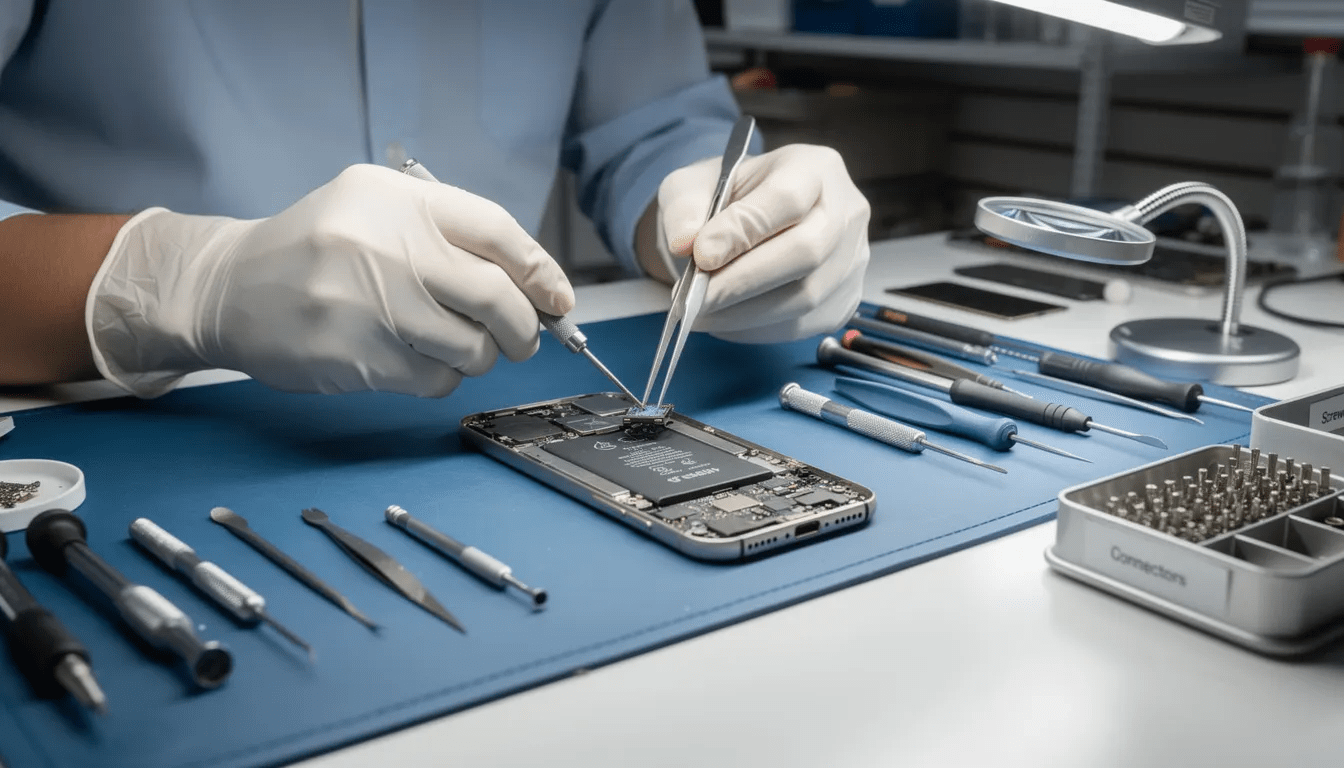
You have three main paths for getting your cracked screen fixed, each with different trade-offs:
Authorized service centers (Apple Store, Samsung-authorized service) are typically the most expensive upfront. However, they use original parts, perform official calibration for features like True Tone, and provide standardized warranties. If your phone is still under warranty or you have AppleCare+/Samsung Care+, this is often the smartest choice.
Reputable local repair shops often charge 20–40% less than official centers. Many can complete same day repairs if they have your screen in stock, and good shops offer lifetime or multi-year workmanship warranties. The 2018 FTC ruling confirmed that third-party repairs don’t automatically void your manufacturer warranty, making this option more attractive.
DIY repair using mail-order kits and online guides offers the lowest parts cost—typically $60–$200 depending on your phone model. iFixit screen kits for iPhone 11 and older models average around $81, while Apple’s Self Service Repair program offers rentable tool kits for $49. However, you assume all risk. About 40% of DIY attempts reportedly run into complications like adhesive failures or damaged flex cables, which can lead to even higher repair costs later.
DIY is best for tech-savvy users comfortable handling tiny screws, heat guns, and fragile connectors. If you’ve never opened a phone before, the potential to create more expensive damage is real.
Warranty, AppleCare+, Samsung Care+, and Carrier Insurance
Your existing coverage can dramatically change what you actually pay at the counter:
-
Standard manufacturer warranties (typically 1 year from purchase) cover defects but specifically exclude accidental damage like drops and cracked glass
-
AppleCare+ and Samsung Care+ reduce cracked screen repairs to a fixed service fee, commonly $29–$99 per incident in the U.S., as long as coverage is active
-
Carrier insurance and third-party protection plans charge monthly premiums plus a deductible (often $99–$249) when you make a claim
Before paying full price for a repair, check whether you have any active coverage. Also compare what you’ve already paid in premiums against the out-of-pocket repair cost. For phones purchased in 2020 or earlier that are nearing replacement age, you may have paid more in insurance fees than the repair would cost without coverage.
Typical 2024 Screen Repair Price Ranges by Phone Type
These generalized U.S. 2024 ranges give you a baseline for comparison. Local taxes, labor rates, and parts availability will cause variation—repairs in New York City typically cost more than in smaller cities.
|
Phone Category |
Typical Price Range |
Example Models |
|---|---|---|
|
Budget Android |
$90–$160 |
Galaxy A14, Moto G series |
|
Mid-range Android |
$140–$220 |
Pixel 6a, OnePlus Nord |
|
Flagship Android |
$220–$380 |
Galaxy S23, Pixel 8 Pro |
|
Older iPhones (pre-2020) |
$120–$200 |
iPhone 8, iPhone XR, iPhone 11 |
|
Recent iPhones (2020–2024) |
$230–$400+ |
iPhone 12, iPhone 14 Pro |
|
Foldables |
$350–$600+ |
Galaxy Z Flip 5, Z Fold 5 |
Note that these ranges cover screen-only repairs. Back glass damage, frame bends, and battery replacement are separate services with their own pricing.
Is It Worth Fixing a Cracked Phone Screen or Should You Replace the Phone?
This is the real question behind every repair cost search. Sometimes fixing makes perfect sense; other times you’re better off putting that money toward a new phone.
A useful rule of thumb: if the repair quote is under 40–50% of your phone’s current resale value, repair usually makes financial sense. For a device released in 2020 or later that still performs well, screen replacement is almost always the smarter move.
Consider replacement instead if:
-
Your phone is more than 4–5 years old (pre-2020 models)
-
It no longer receives security updates from the manufacturer
-
You’re also dealing with weak battery life, slow performance, or unreliable cameras
-
The repair quote approaches or exceeds half the cost of a comparable new phone
To decide, check current used prices for your exact model on sites like Swappa or eBay. If your 2021 iPhone 13 is worth $450 used and the screen repair costs $200, fixing it preserves $250 in value. If your 2018 phone is worth $120 and repairs cost $150, replacement makes more sense.
One factor worth considering: repairing is generally the more environmentally responsible option. Keeping working devices out of landfills reduces e-waste and the environmental impact of manufacturing a new device.
How to Save Money on Phone Screen Repair Without Sacrificing Quality
Getting a good deal on screen repair doesn’t mean accepting the cheapest parts or the shadiest shop. Here’s how to save money while still getting quality work:
- Get at least two itemized quotes from repair shops in your area before committing. Ask for a breakdown showing parts cost, labor, tax, and warranty length separately.
- Ask specifically about part grade (OEM, premium aftermarket, or budget aftermarket). Check online reviews that mention screen color, brightness, and touch quality after repair—not just speed and price.
- Check all your existing protection options: credit card purchase protection (many cards cover accidental damage for 90–120 days), manufacturer coverage, or carrier insurance you may have forgotten about.
- For older backup devices, opting for mid-grade aftermarket screens is a reasonable way to keep costs down without major quality sacrifices.
- Invest in protection after repair: A $15–$40 tempered glass protector and sturdy case can prevent you from paying for another screen replacement within the same year. The rest of your phone’s lifespan depends on avoiding repeat damage.
Urban locations typically charge 20–50% more than smaller cities due to higher labor rates and overhead. If you’re near a city border, checking shops in nearby towns might reveal significant savings.
FAQ
How long does a typical phone screen repair take?
Many local repair shops can replace common screens—like iPhone 11 through 14 or popular Samsung Galaxy models—in 30 to 120 minutes if parts are in stock. Mail-in repairs or fixes for rare models may take several days including shipping time and parts ordering. Apple Store and authorized samsung service appointments often complete work same-day, but you may wait for an available slot.
Will I lose my data when my phone screen is repaired?
A screen replacement alone usually does not erase your data. Professional repair technicians avoid factory resets 99% of the time. However, you should still back up your phone beforehand because any repair carries some risk, especially if hidden internal damage exists from the drop that cracked your screen. It takes just a few minutes to create a backup and eliminates worry entirely.
Is it safe to keep using a phone with a cracked screen?
Minor cracks may seem mostly cosmetic at first, but they can spread with temperature changes or additional minor impacts. Cracks also reduce your phone’s water resistance (even IP68-rated devices drop significantly after screen damage) and can expose you to sharp glass fragments. It’s safer to repair or at least apply a tempered glass protector over the damaged area to hold shards in place until you can schedule a proper fix.
Can a screen protector fix or hide a crack?
Screen protectors and liquid glass products cannot repair existing cracks. They can only help prevent further chipping and keep loose glass fragments in place, making the phone safer to use temporarily. Consider them a stopgap measure until you can afford a proper screen replacement—not a permanent solution.
Does repairing my screen void my manufacturer warranty?
The 2018 FTC ruling established that manufacturers cannot void warranties simply because you used a third-party repair service. However, if the repair shop damages internal components or uses parts that cause additional issues, warranty coverage for those specific problems may be affected. Owners of newer phones still under warranty or with active AppleCare+/Samsung Care+ should check their specific terms before choosing where to repair. For phones already out of warranty, this concern doesn’t apply.